
KEY TAKEAWAYS
- SERA democratizes space access using the TON Blockchain, allowing global participation in space missions via Telegram.
- Over 90,000 participants from 175 countries compete for spaceflight opportunities, with a transparent, on-chain selection process.
- The initiative reserves seats for underrepresented nations and enables community-driven space research through the SERA Science Platform.
- TON Blockchain ensures efficient, low-cost transactions, supporting large-scale voting and participation without technical barriers.
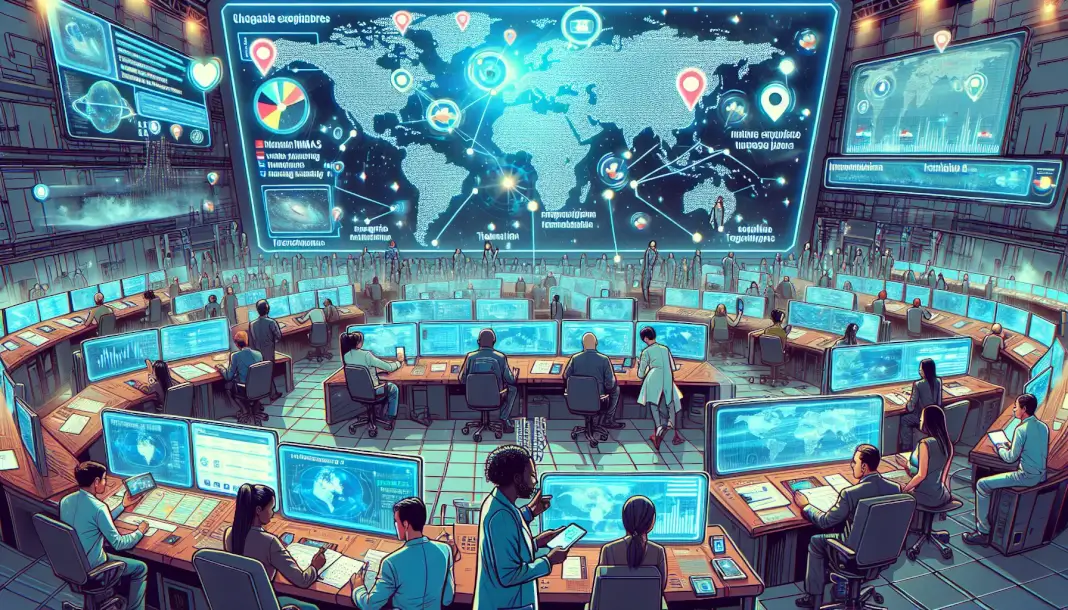
Space exploration, traditionally dominated by government agencies, is witnessing a shift with the introduction of SERA, a platform that aims to democratize access to space. Built on the TON Blockchain and operating within Telegram, SERA’s Mission Control mini app allows anyone with a smartphone to participate in space missions. Users can launch their own campaigns to become astronauts or vote for representatives on upcoming human spaceflights, such as Blue Origin’s New Shepherd mission.
Since the announcement on September 30, 2025, the initiative has attracted over 90,000 participants from 175 countries. This global community is actively competing for a chance to fly to space, with the selection process being entirely on-chain, ensuring transparency and inclusivity.
How SERA’s Mission Control Operates
The SERA Mission Control mini app, accessible via Telegram, engages users through challenges and community-building activities. Participants earn SpaceDust, a form of reward points, as part of the qualification process. The selection process leverages TON’s decentralized infrastructure, empowering communities to decide who flies and which scientific experiments are conducted in space.
Six seats are reserved for nations with limited astronaut representation, including Nigeria, India, Brazil, and Thailand, with one open seat for the rest of the world. This initiative follows SERA’s previous collaboration with Blue Origin, which saw Victor Hespanha become South America’s first civilian astronaut.
The SERA Science Platform, also powered by TON, enables the global community to propose and vote on microgravity experiments, shifting space research from exclusive labs to a collaborative, community-driven process.
TON Blockchain: Enabling Global Participation
TON Blockchain supports the large-scale voting required for SERA’s mission by processing over 104,000 transactions per second at an average cost of $0.003 per transaction. This efficiency ensures that millions can participate without facing network congestion or high fees. Votes are settled in 3-5 seconds, providing a transparent and auditable record that builds trust in the selection process.
Telegram’s integration with SERA offers access to over a billion users worldwide. The mini-app architecture allows participation without the need for complex wallet setups or blockchain knowledge, making the technology seamless for users focused on the mission.
Founders’ Vision for Accessible Space Exploration
SERA was co-founded by Sam Hutchison, a veteran of the new space economy, and Joshua Skurla, an entrepreneur with expertise in media and finance. Hutchison brings aerospace legitimacy and handles partnerships with Blue Origin and national space agencies, while Skurla focuses on creative direction and media partnerships, leveraging his experience to build a global community.
The founders emphasize the importance of democratizing space access to accelerate scientific progress and unlock the solar system’s resources for humanity’s benefit. By fostering educational pipelines in regions historically excluded from space exploration, SERA aims to build a global community of innovators ready to tackle the challenges of space exploration.
For more information on how SERA is transforming space exploration, visit the official announcement here.
Why This Matters: Impact, Industry Trends & Expert Insights
The SERA platform is leveraging the TON Blockchain to democratize space exploration by allowing global participants to engage in space missions via a decentralized voting system. This initiative aims to make space more accessible to individuals worldwide, particularly from underrepresented nations.
Recent industry reports indicate that space democratization is being driven by blockchain technology, which enhances secure, decentralized data transmission and space activity management. This aligns with SERA’s use of blockchain to ensure transparency and inclusivity in selecting participants for space missions, marking a significant shift in traditional space exploration paradigms.
A report by The Currency Analytics highlights that the integration of TON Blockchain with SERA’s Mission Control app is a pioneering use of Web3 infrastructure beyond finance. This supports the initiative’s impact by providing a transparent, on-chain voting system that democratizes the selection process for space missions, offering a model for future applications in the space sector.
Explore More News:
Disclaimer: The views expressed in this article are those of the authors and do not necessarily reflect the official policy of CoinsHolder. Content, including that generated with the help of AI, is for informational purposes only and is not intended as legal, financial, or professional advice. Readers should do their research before taking any actions related to the company and carry full responsibility for their decisions.

