
KEY TAKEAWAYS
- Flow is integrating decentralized finance into everyday financial solutions, aiming to enhance consumer adoption.
- The introduction of ‘enshrined protocols’ like the Flow Credit Market aims to provide sustainable yield and minimize risks.
- Flow’s network-wide fee update supports increased transaction volumes, transitioning to a deflationary token model.
- Flow’s strategic developments aim to make DeFi accessible to mainstream users, maintaining low transaction costs.
Flow, a leading consumer Layer 1 (L1) blockchain network, is advancing its strategy to integrate decentralized finance (DeFi) into everyday financial solutions. The network, known for its successful partnerships with global brands like NBA Top Shot, NFL, Disney, and Live Nation, has onboarded over 15 million consumers and minted more than 200 million digital assets. This success has positioned Flow as a pioneer in consumer adoption.
In its latest move, Flow is set to transform DeFi into practical financial solutions for everyday users. The network aims to replace friction with protocol-level safeguards and speculation with sustainable yield sources, marking the beginning of what it terms ‘Consumer DeFi.’ This initiative is supported by the Flow Foundation and Dapper Labs, leveraging their expertise to enhance user experience and accessibility.
Enshrined Protocols: A New Architectural Element
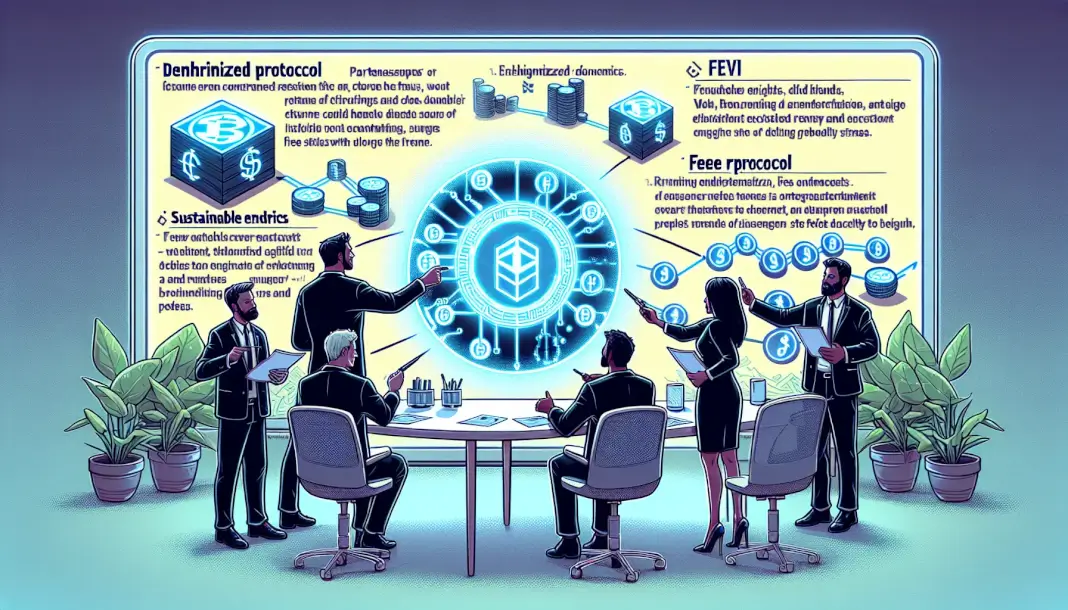
Flow is introducing ‘enshrined protocols,’ which are public utilities integrated directly into the network’s foundation. These protocols aim to align network value accrual with consumer adoption by enabling shared liquidity and pooled markets. The first of these, the Flow Credit Market (FCM), is an automated lending protocol designed to maximize loan-to-value ratios while minimizing liquidation risks.
FCM utilizes Flow’s on-chain scheduling capabilities to set recurring triggers without external oracles, offering higher yields for lenders and borrowers. Internal simulations suggest that FCM could have protected user deposits during past market crashes. To support FCM, Dapper Labs is launching Peak Money, a flywheel application designed to introduce 100 million new users to crypto through a seamless, mobile-first experience.
Sustainable Economics and Fee Update
Flow is transitioning to a mature network phase, implementing a network-wide fee update to support increased transaction volumes. This update shifts from subsidized growth to a deflationary token model, linking network usage directly to network value. The model is designed to make the FLOW token net deflationary at a sustained 250 transactions per second (TPS), a target expected to be reached through FCM and other consumer DeFi applications.
Despite the fee update, Flow maintains low transaction costs compared to other networks like Solana and Base, ensuring scalability without compromising decentralization. This efficiency allows Flow to support millions of daily active users without burdening developers and users with volatile gas fees.
Flow’s strategic developments in Consumer DeFi and enshrined protocols are set to redefine the landscape of crypto adoption, making DeFi accessible to mainstream users. For more information, visit the official announcement here.
Why This Matters: Impact, Industry Trends & Expert Insights
Flow’s integration of decentralized finance (DeFi) into its Layer 1 blockchain network aims to transform DeFi into practical financial solutions for everyday users by introducing enshrined protocols and a revamped fee structure.
Recent industry reports indicate that consumer DeFi adoption is experiencing explosive growth, driven by decentralized exchanges, automated market makers, and cross-chain technologies. This aligns with Flow’s efforts to make DeFi accessible to mainstream users through innovative enshrined protocols and sustainable yield sources.
As per insights from Flowdesk, the Flow credit market is viewed as fragile yet active, with strong borrowing activity despite compressed yields. This supports Flow’s introduction of the Flow Credit Market, which aims to maximize loan-to-value ratios while minimizing liquidation risks, reflecting cautious optimism in the credit markets.
Explore More News:
Disclaimer: The views expressed in this article are those of the authors and do not necessarily reflect the official policy of CoinsHolder. Content, including that generated with the help of AI, is for informational purposes only and is not intended as legal, financial, or professional advice. Readers should do their research before taking any actions related to the company and carry full responsibility for their decisions.

